

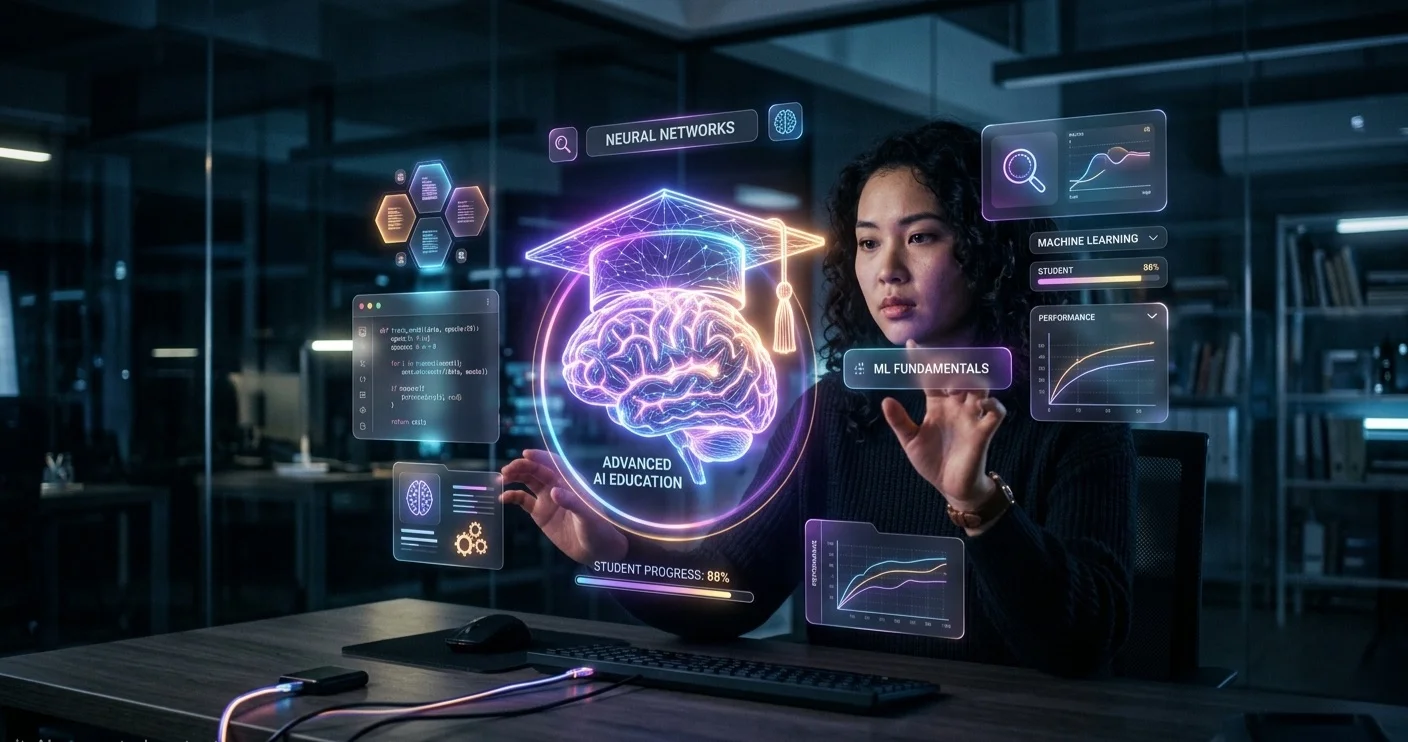
I was always the type who would sit for hours with textbooks and notebooks. Classic student mode: study, review, hope something sticks. Then AI learning tools arrived and, if I am being honest, quite a lot changed for the better.
I do not want to sound like an ad because I am not. There are bad experiences and disappointing tools in the mix too. But there are specific AI learning tools that genuinely made a difference in how I approach new topics. Here is the personal story.
How I started using AI for learning
It started with simple frustration. I was learning programming and kept getting stuck on the same types of errors. Stack Overflow is great but the answers are often too detailed or assume too much prior knowledge. ChatGPT was a revelation because I can tell it exactly what I do not understand and get an explanation calibrated to my level.
But I quickly realized that the "just ask AI" approach was not enough. I needed something more structured, something that would track progress and build on what I already knew. That is when specialist AI tools for learning entered the picture.
Notion AI plus personal notes: a combination that works
This is probably the most expected recommendation but also the most practically useful. I keep all my notes in Notion. The AI helps me convert them into quiz questions, summaries, and mind maps. It is not magic, but it changed how I organize information.
The key insight is that AI here is not an all-knowing guru. It is a tool that helps me better process what I have already learned. That distinction matters. If you only use AI to get answers without going through the understanding process yourself, you are learning less than you think.
Anki with AI-generated flashcards: classic method meets new technology
Anki is one of the most tested learning systems ever built. The spaced repetition method is neuroscientifically backed and genuinely works. The problem is that creating cards is tedious. AI has now solved that problem.
There are extensions and tools that automatically generate Anki cards from text you give them. I paste a chapter from a book or my notes and get 20 or so cards to practice with. This is one of the cases where AI learning software genuinely saves significant time without compromising the quality of learning.
Perplexity for research: faster than Google, more reliable than ChatGPT
When I am learning a new topic and need to quickly research context, Perplexity AI has become my main tool. Unlike ChatGPT which can hallucinate, Perplexity gives you sources alongside every answer. You can verify where information comes from, which is critical for academic work or serious learning.
It is not a replacement for reading primary sources, but it is a great tool for initial orientation in a new topic. Especially useful when studying fast-moving fields where textbooks are already outdated.
What did not help: the honest part
I tested several popular AI learning software platforms promising "personalized curriculum." Most were disappointing. Many just generate a plan regardless of your existing knowledge or goals. That is not adaptive learning. That is an expensive Word document.
I also tried using AI to learn skills that require physical practice. As you might expect, AI cannot help much there. Practice remains practice and there is no substitute for hours spent doing the actual work.
Tips for those just starting out
If you want to start using AI learning tools intelligently, start with one tool in an area where you already have some context. Do not give in to the temptation to let AI think for you. Use it as a conversation partner and comprehension check, not a source of ready-made answers.
An AI learning tool that actually works is one that makes you think more, not less. If a tool constantly gives you finished answers without engaging your thinking process, you are wasting the potential it has.